Le Déjeuner sur l'herbe (Luncheon on the Grass)
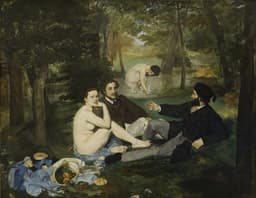
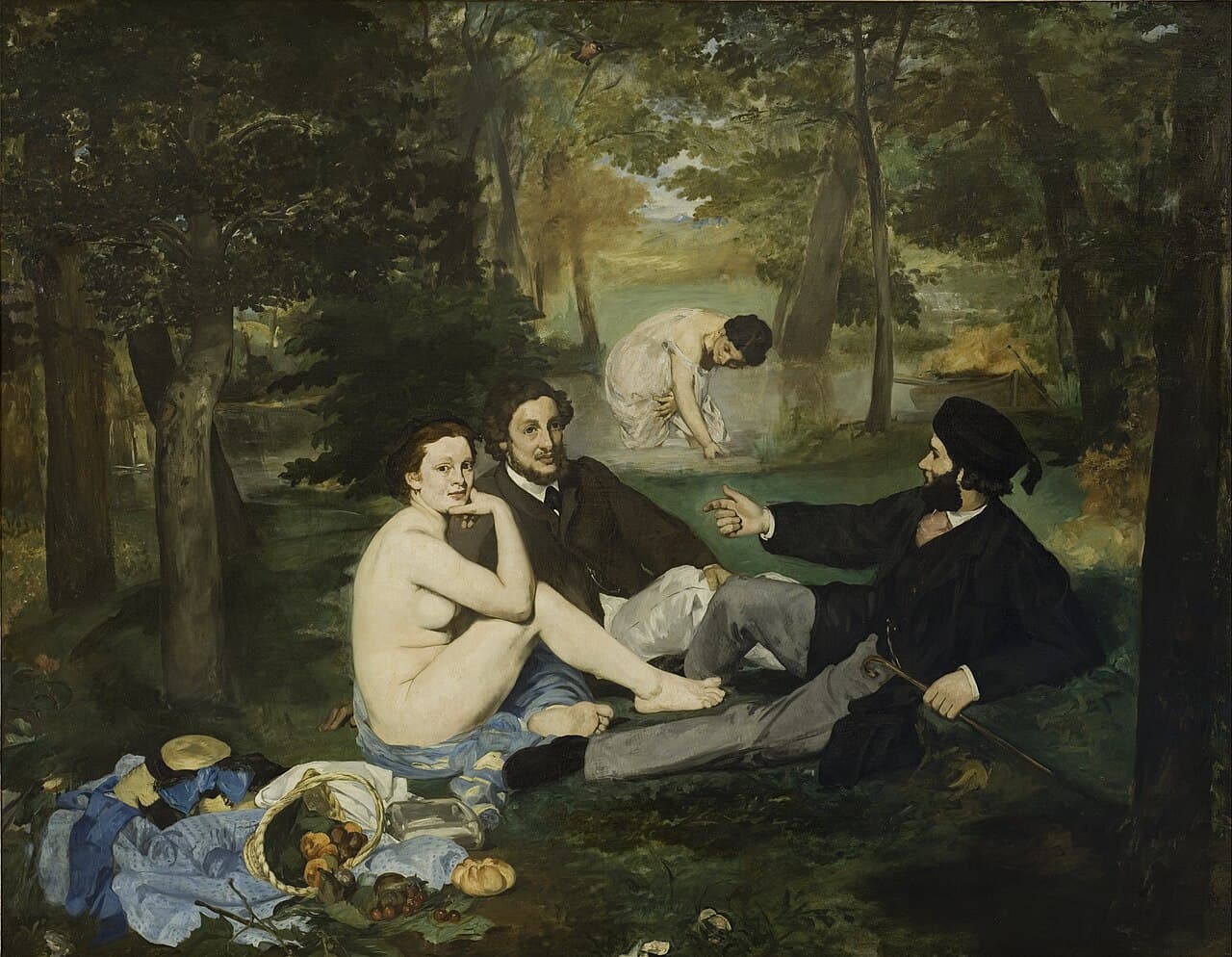
This is Manet's Luncheon on the Grass.
In 1863, this work was submitted to the Salon — France's most prestigious art exhibition.
What was the verdict?
Rejected — very much in keeping with Manet's reputation.
That year, however, the Salon jury had been unusually severe. Not only Manet but a great many artists saw their work turned away, and painters began to protest vigorously.
The outcry eventually reached the ears of Emperor Napoleon III.
The Emperor did not overturn the jury's decisions, but he did permit the rejected works to be exhibited separately.
And so the Salon des Refusés — one of the most consequential exhibitions in art history — came into being.
The First Reason It Caused a Scandal
Even at the Salon des Refusés, this painting stood at the very center of controversy.
Why?
The Second Reason
The other charge leveled against it was simply that it was badly painted.
Audiences accustomed to the exaggerated, idealized volumes of traditional academic nudes felt the picture looked as though it had been cut from colored paper and pasted together. On top of that, Manet had woven in parodies of two Renaissance masterworks — Raphael's The Judgment of Paris and Giorgione's Pastoral Concert. For the established academic painters, this was nothing short of a provocation.
It Changed Art History All the Same
This painting ultimately shifted the very landscape of art. For the younger artists who encountered it, it became a catalyst for breaking free from the exaggerated three-dimensionality of the academic tradition.
A new generation of painters found in Manet a fresh revelation.
One need not slavishly copy the classics.
The age we are living in can itself become a subject for painting.
And that conviction became, in time, one of the founding impulses of Impressionism.