Olympia
A Gaze That Unsettled Everyone
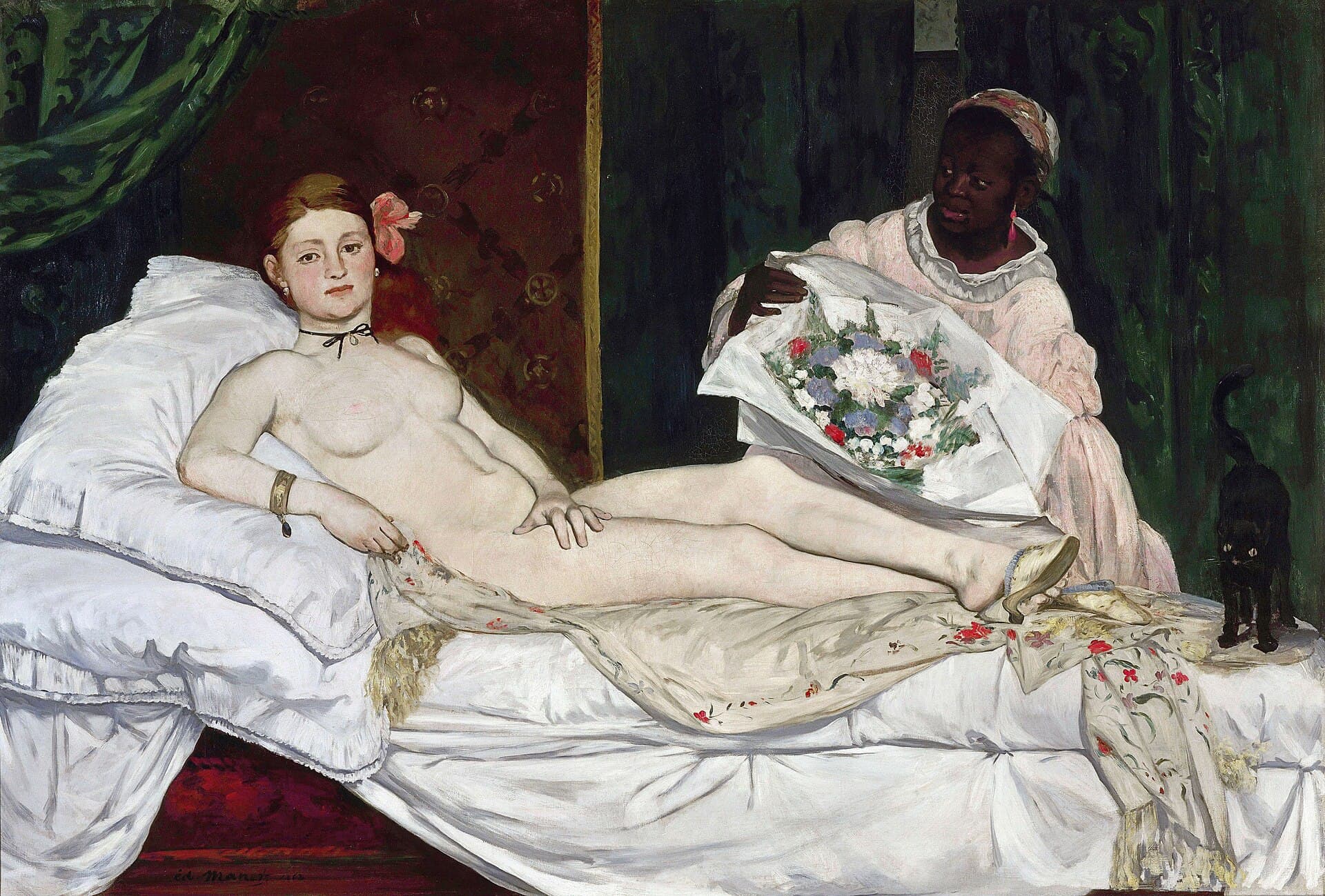
A woman lies on a bed.
She conceals nothing — not her gaze, not her body, not her expression.
Instead, she stares back at us. As if to say:
"Why so surprised?"
The Same Nude, Completely Different Reactions
The 1865 Paris Salon. Manet's Olympia was met with a storm of condemnation.
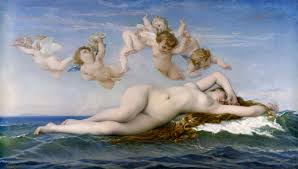
What makes this remarkable is that Cabanel's The Birth of Venus, shown the very same year, was also a nude.
Both depicted the female body unclothed — yet one was greeted with acclaim, while the other was met with mockery and jeers.
So what, exactly, was the difference?
Why Was She Not Venus?
The difference lies, surprisingly, in small details.
Look at Olympia's neck. A black ribbon is tied around it. A bracelet hangs from her wrist, and a slipper dangles from her foot.
Parisians of the time recognized these accessories at a glance.
"Ah — this woman is no goddess."
She was not the Venus of mythology but a real woman of contemporary Paris.
There is a more explicit clue as well: the painting's title.
"Olympia" was a name commonly used by Parisian prostitutes of the era. As Alexandre Dumas's novel La Dame aux Camélias swept through popular culture, the name had spread as a kind of shorthand.
In other words, Manet hid nothing.
Not who this woman was, not what this city desired, and not what people chose to look away from in their daily lives.
What Did Manet Change?
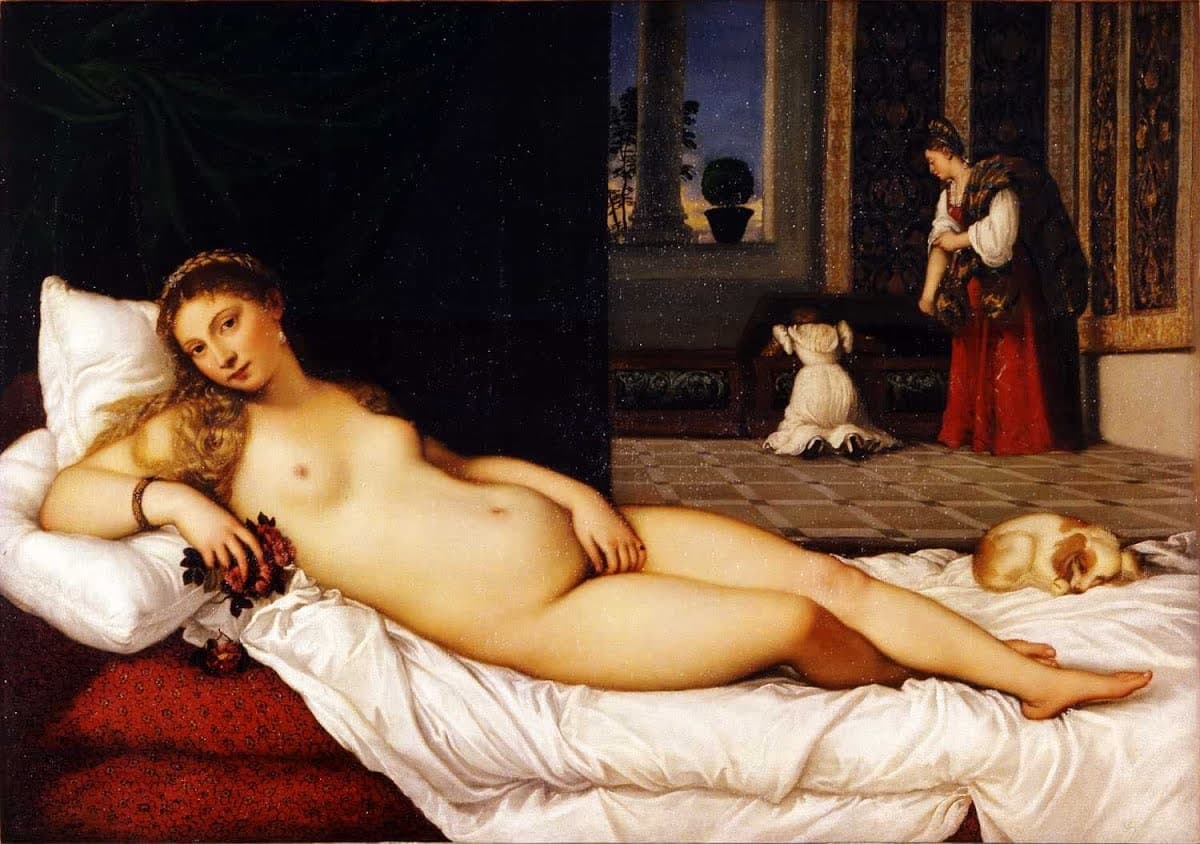
The composition itself was not new.
Manet drew on Titian's Venus of Urbino: a reclining woman, a maidservant nearby, and an animal to anchor the gaze.
Where Titian had placed a small dog, however, Manet substituted a black cat.
The mood shifted entirely.
Titian's Venus is soft and idealized. Olympia, by contrast, is cool and unflinchingly real. Rather than seducing the viewer, she simply looks back.
It was that gaze that made contemporaries so uncomfortable.
Why Were People So Angry?
Because everyone already knew.
The bourgeois men who spoke publicly of refinement and propriety were, behind closed doors, consorting with women exactly like her.
The Black maidservant beside Olympia is no mere backdrop either. The bouquet of flowers implies a gift from someone; her jewels and ornaments suggest a patron.
This was less a nude than a portrait that laid bare the hypocrisy of Parisian society — directly and without apology.
And so people were furious.
Nudity was acceptable. Reality was not something they wished to see.
This May Be Where Modern Art Began
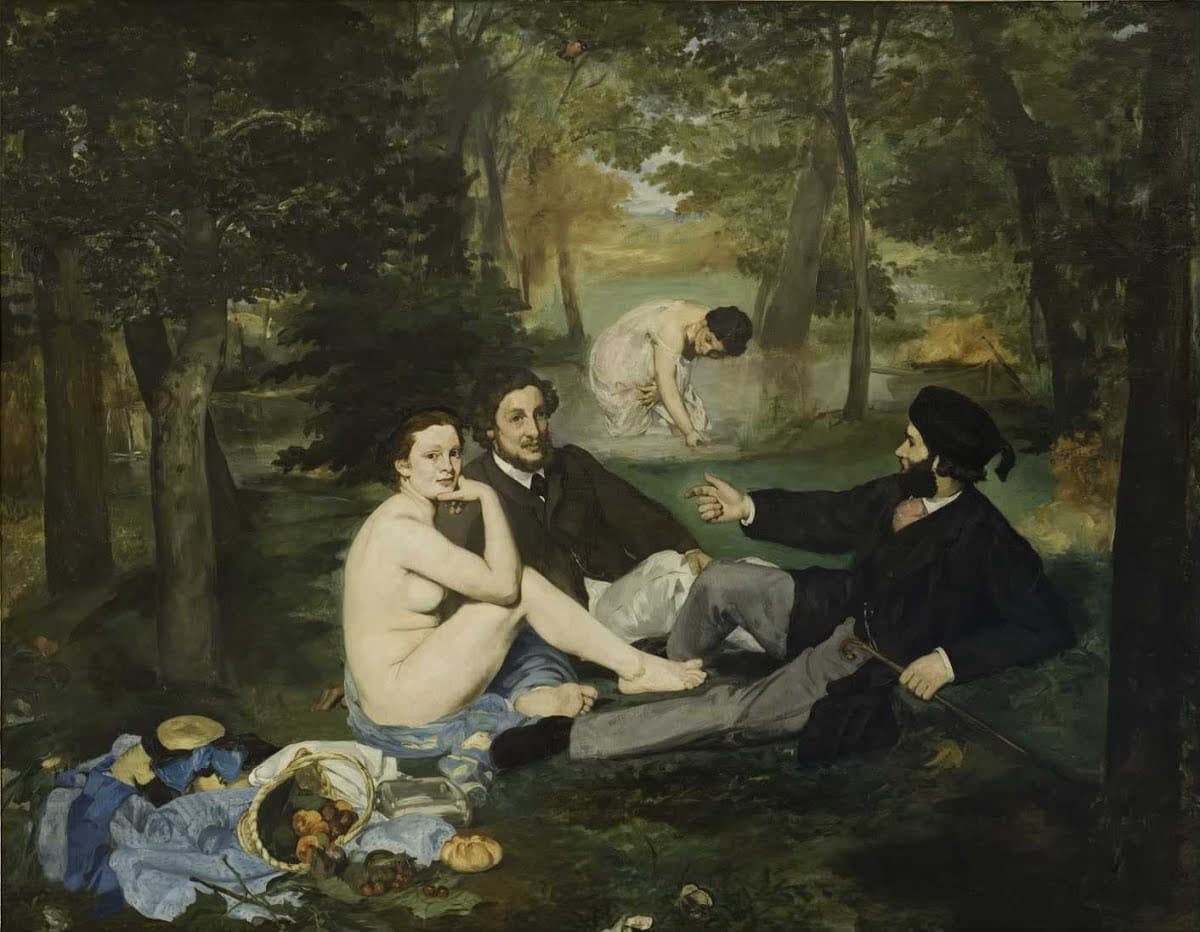
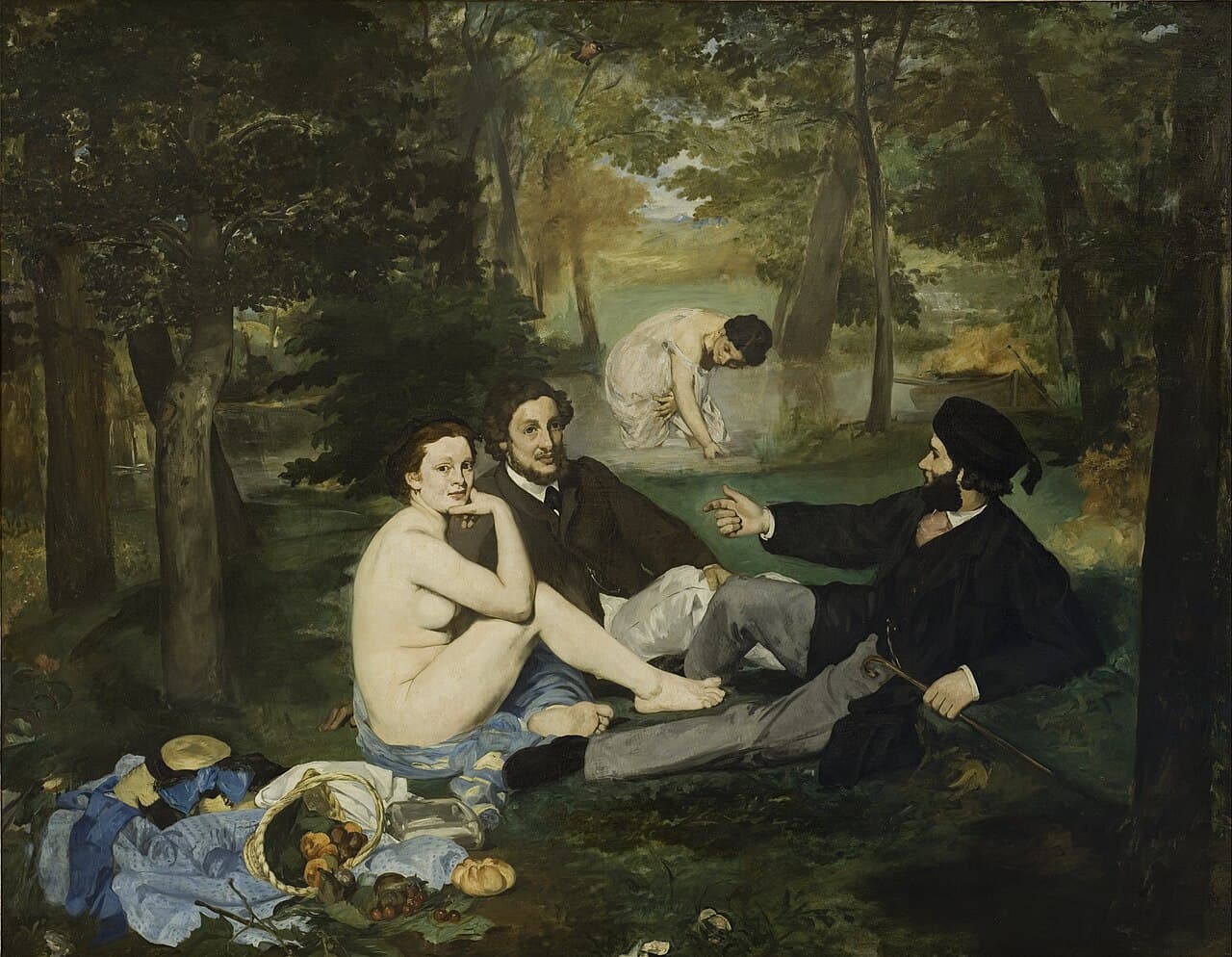
Manet had already sparked controversy once before with Le Déjeuner sur l'herbe. There, too, he placed not a mythological goddess but a real, contemporary woman in the nude.
And with Olympia, he posed the same question once more.
"Why must art conceal reality?"
Manet never compromised.
And so some have said that modern art perhaps began on this provocative bed.
Even now, we find ourselves pausing before this painting.
Because her gaze, 150 years on, has not retreated a single inch.