sunflower
The sunflower is mine.
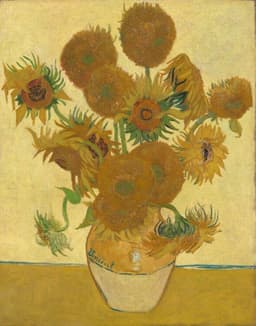
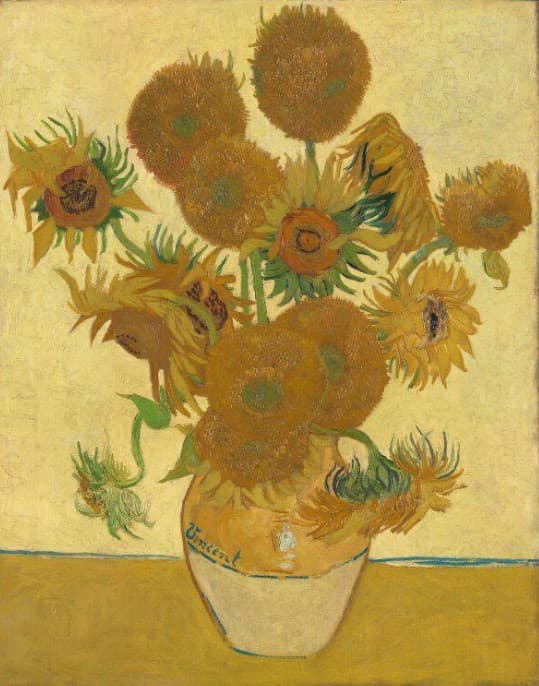
One of Van Gogh's great masterworks: the Sunflowers.
Van Gogh was so devoted to sunflowers that he once declared, "The sunflower is mine." No other painter in history has been so intimately identified with a single flower — and the sunflower belongs to Van Gogh alone. His passion for them drove him to paint the subject again and again.
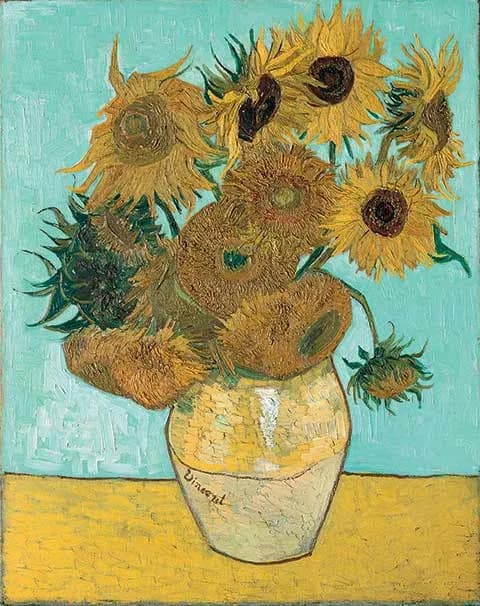
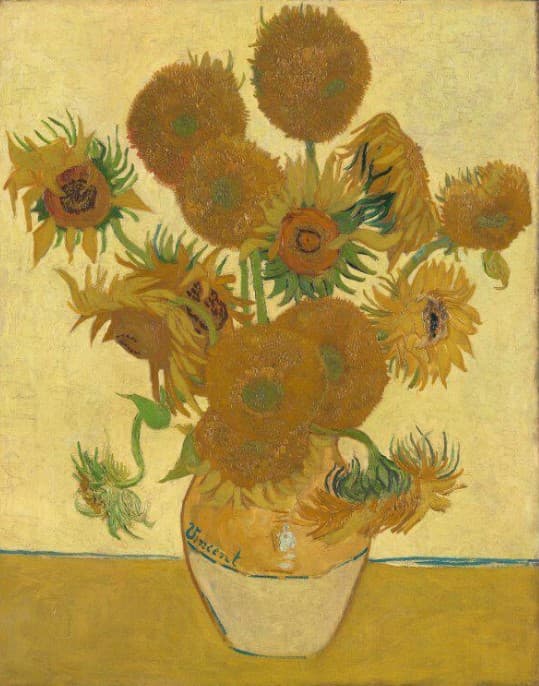
Looking at the painting, one notices that some sunflowers are in full bloom while others are wilting.
This was Van Gogh's way of representing the arc of human life through the flowering and fading of sunflowers. The idea was not entirely his own invention — it belongs to a tradition rooted in seventeenth-century Dutch still-life painting known as vanitas still life (Vanitas-stilleven), a genre that used symbolic imagery to evoke the transience of life and the full range of human emotion.
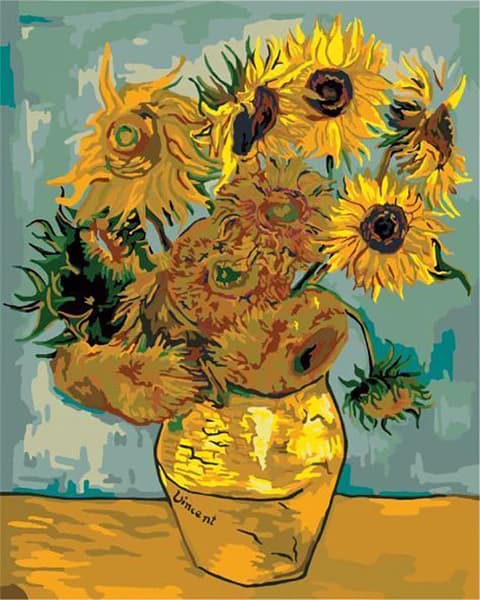
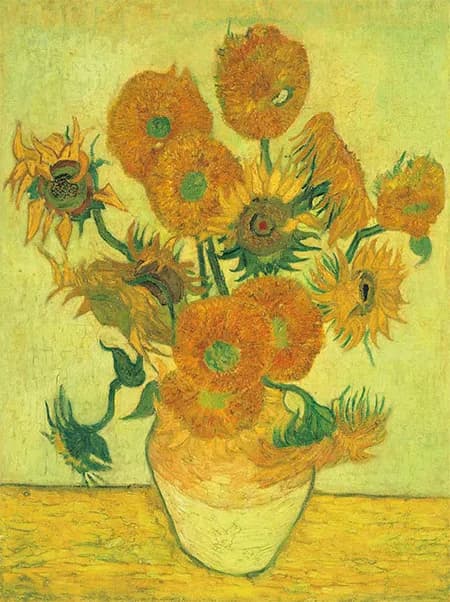
Five versions of Van Gogh's Sunflowers survive today, including the one before us. There were originally said to be seven. One remains in a private collection and has never been made public; another, once owned by a Japanese collector, is believed to have been destroyed during the Second World War.
Another reason this painting holds such significance is that it was the first major work Van Gogh painted in Arles, in the south of France.
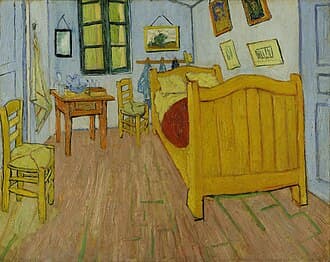
It marks the beginning of the extraordinary sequence of masterpieces Van Gogh would create there — among them The Bedroom at Arles and The Starry Night over the Rhône.
Why did Van Gogh paint the Sunflowers?
Living alone in Arles, Van Gogh received word from his brother Theo that Paul Gauguin would be coming to live with him. The prospect of companionship after months of solitude lifted his spirits enormously, and he painted this work with the express purpose of decorating Gauguin's room. Perhaps it is that joy — the warmth of anticipation — that makes the painting feel so uplifting, even simply to look at it.
Sadly, Gauguin and Van Gogh's time together ended in conflict, and the two could not sustain their life under one roof for long. The painting was left hanging in the room Gauguin never truly made his own.
Van Gogh's paintings must be seen in person to be fully appreciated.
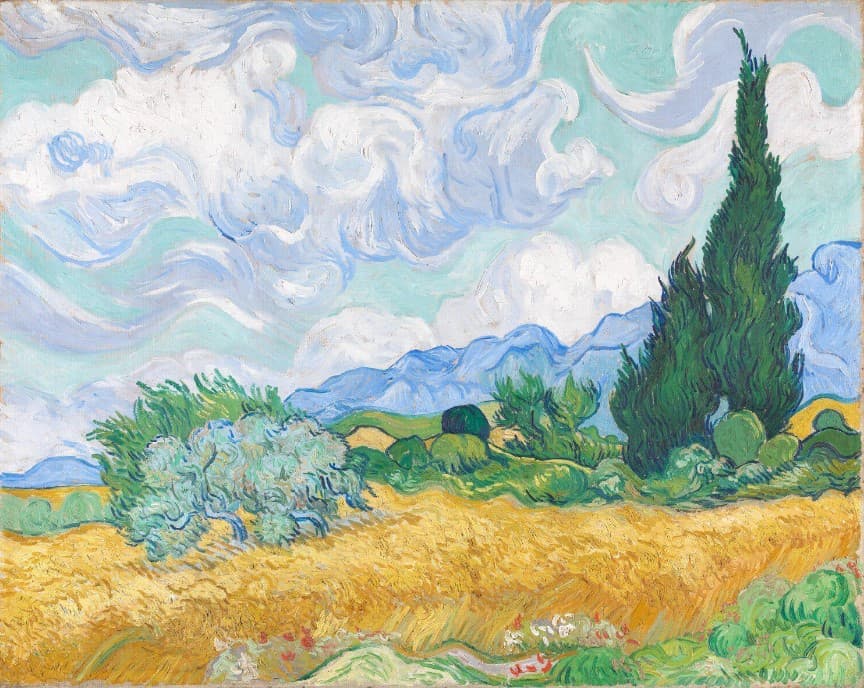
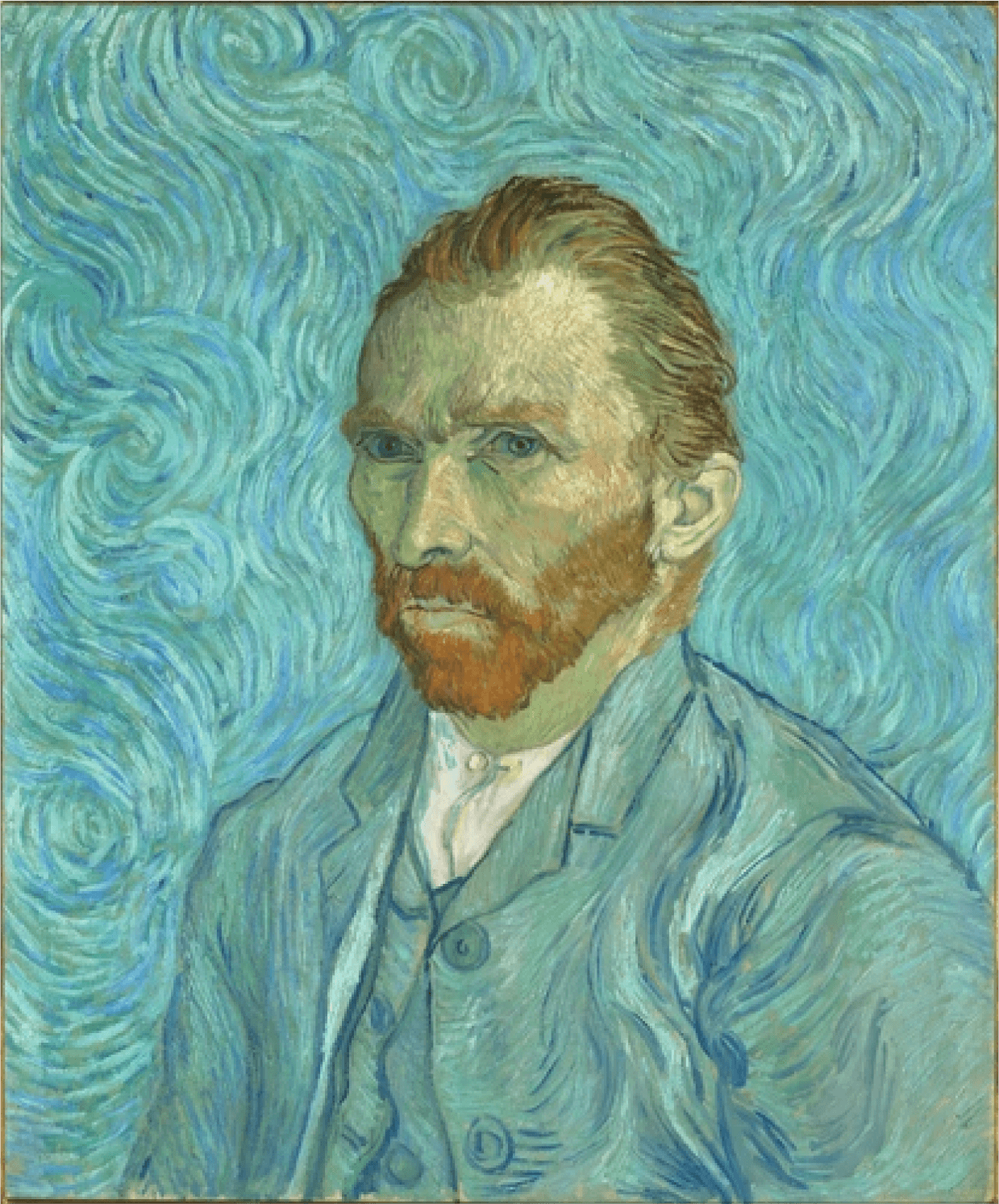
The reason lies in the impasto technique he so frequently employed. Impasto involves applying paint in thick, heavy strokes — sometimes straight from the tube — so that the surface of the canvas becomes almost sculptural. The resulting texture, with its ridges and undulations, can only be truly felt in front of the original. This painting was executed in impasto using the oil-based tube paints that had only recently come to market in the nineteenth century, and the physical richness of that surface remains one of its most compelling qualities.