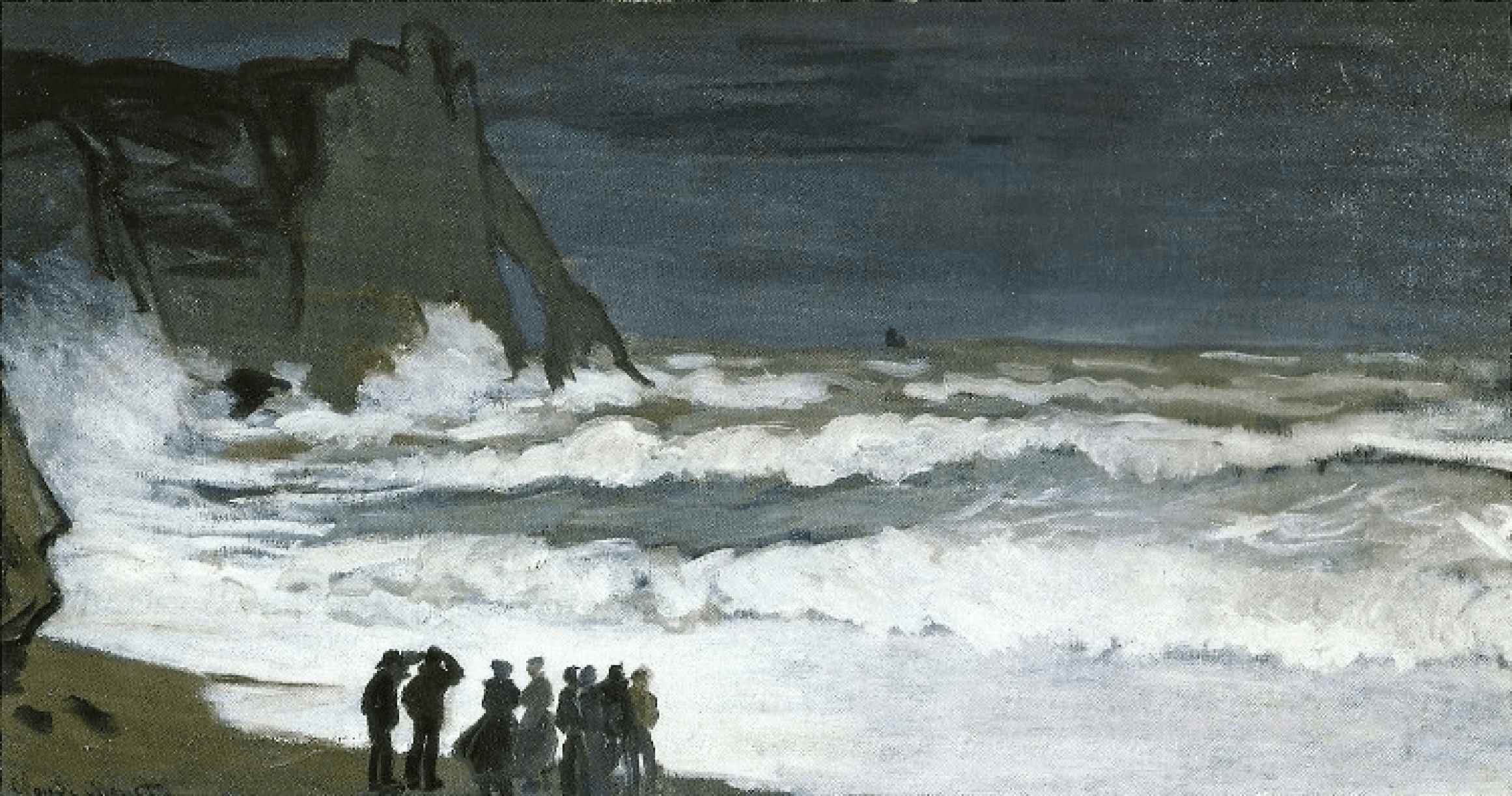
The Rough Sea at Étretat
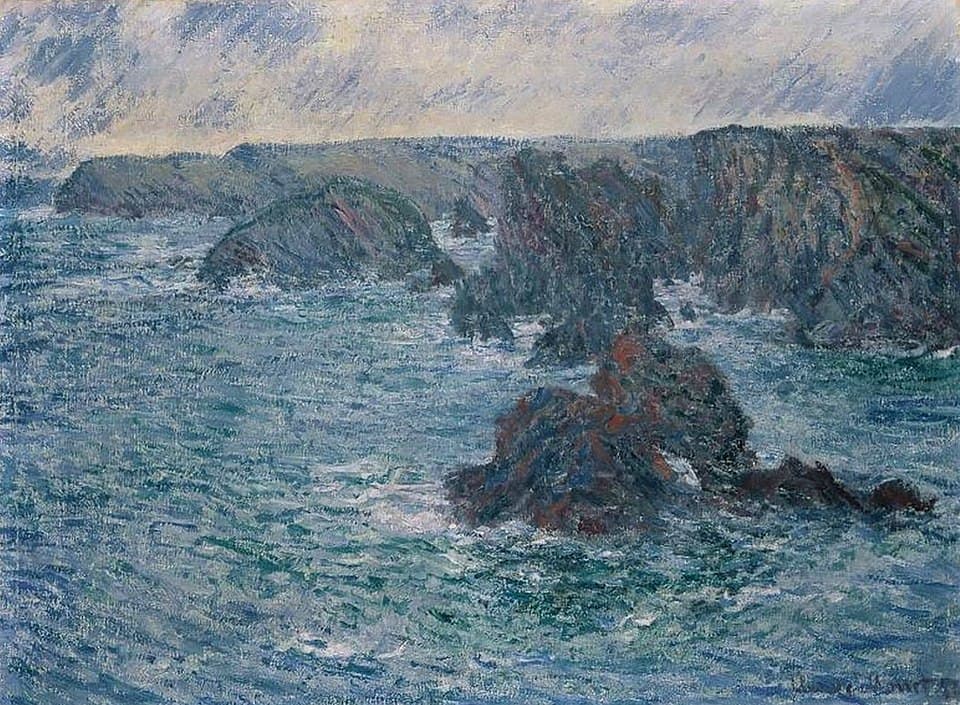
True to its title, the sea is extraordinarily rough.
Waves surge in without pause,
and the sky hangs heavy, as though it could burst into rain at any moment.
Monet was a painter who returned to the same place again and again.
He believed that as the hour shifts,
the weather changes,
and the light transforms — the very same landscape becomes something entirely different.
And so he rendered a single scene across multiple canvases,
and we call these bodies of work "series."
When the light fades, the sea changes its expression
Looking at Monet's paintings of Étretat, no two carry quite the same mood.
On some days the sea is bright and shimmering,
but this painting feels far darker, far colder.
That day, the sky was overcast.
The less light there is, the heavier the color of the sea becomes,
and the cliffs and sky gradually dissolve into a muted, sinking haze.
Monet was not simply recording the shape of a landscape —
he was reaching to capture the temperature of the air and the quality of the light on that particular day.
Two painters, one place
Étretat was a place that inspired not only Monet but countless other painters.
Comparing it with Courbet's painting of Étretat — which we saw earlier today — makes the contrast all the more vivid.
True to his Realist sensibility, Courbet rendered the cliffs and waves with a solid, tactile presence.
Monet, by contrast, was less concerned with form itself
than with the fleeting impression of a moment as it is continuously reshaped by light.
Courbet's sea feels like "an actual landscape,"
while Monet's feels like "a sensory instant."
They looked at the same sea,
yet each painter was drawing an entirely different world.
Now, take a moment to look at the painting slowly.
You may find that you can almost hear the waves — and feel the cold wind against your face.