풀밭 위의 점심식사
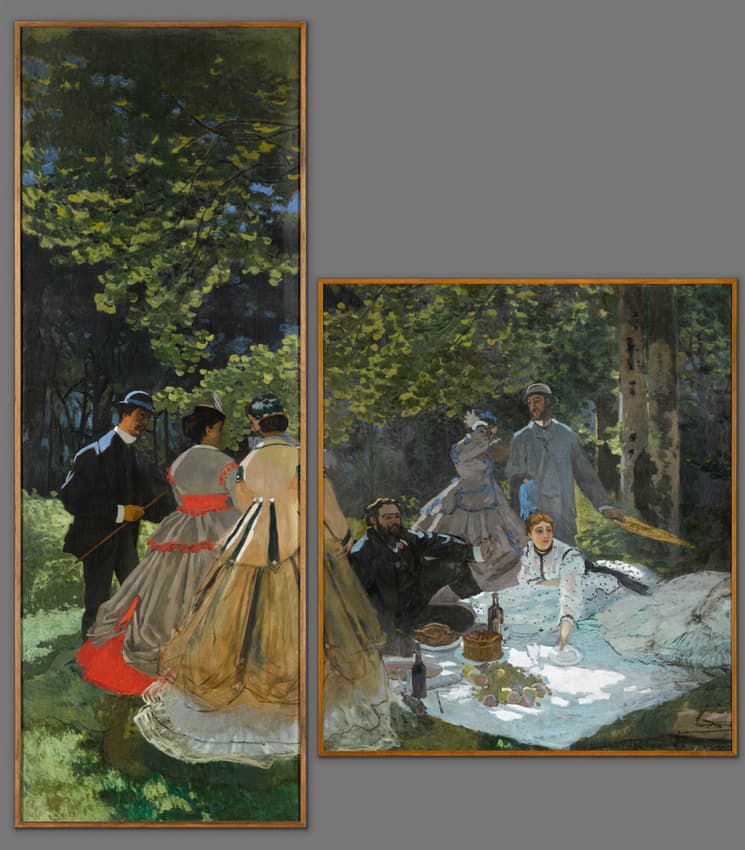
When you see this painting in person, two things strike you immediately.
The first is its overwhelming scale. The canvas measures roughly six meters wide and four-point-six meters tall — a truly monumental work.
The second is that the painting is not one canvas but two separate fragments.
It was not always this way.
At the time Monet was working on this painting, he was so destitute he could barely pay his rent. He eventually left the canvas with his landlord in lieu of payment.
When he returned to reclaim it some time later, he found that poor storage conditions had allowed mold to spread across parts of the canvas. Left with no other option, Monet cut away the damaged sections and preserved only what remained — which is why the work survives today as two separate pieces.
For Monet, it remained one of the most painful memories of his career.
The Hipsters of Paris, All in One Frame
Most Impressionist painters of the era lived modestly, far from comfortable means.
Rather than hiring professional models, they often turned to family and friends — and the figures who appear in this painting are largely people from Monet's own circle.
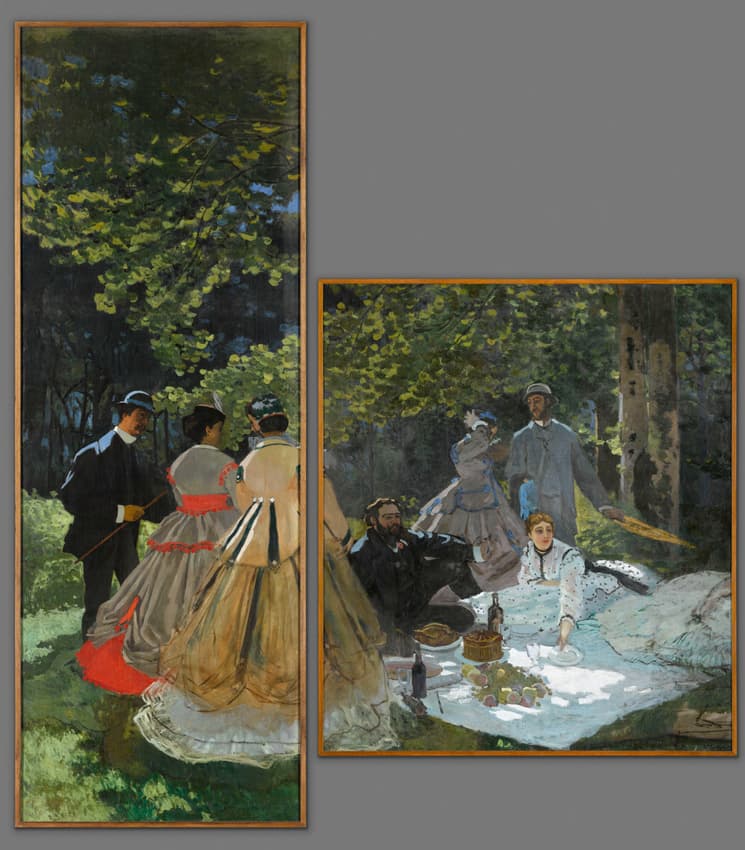
By today's standards, it is something like a group photograph of the stars of the Parisian art world alongside their closest friends.
A Challenge Born from Manet
To fully understand this work, there is one other painting you must know.
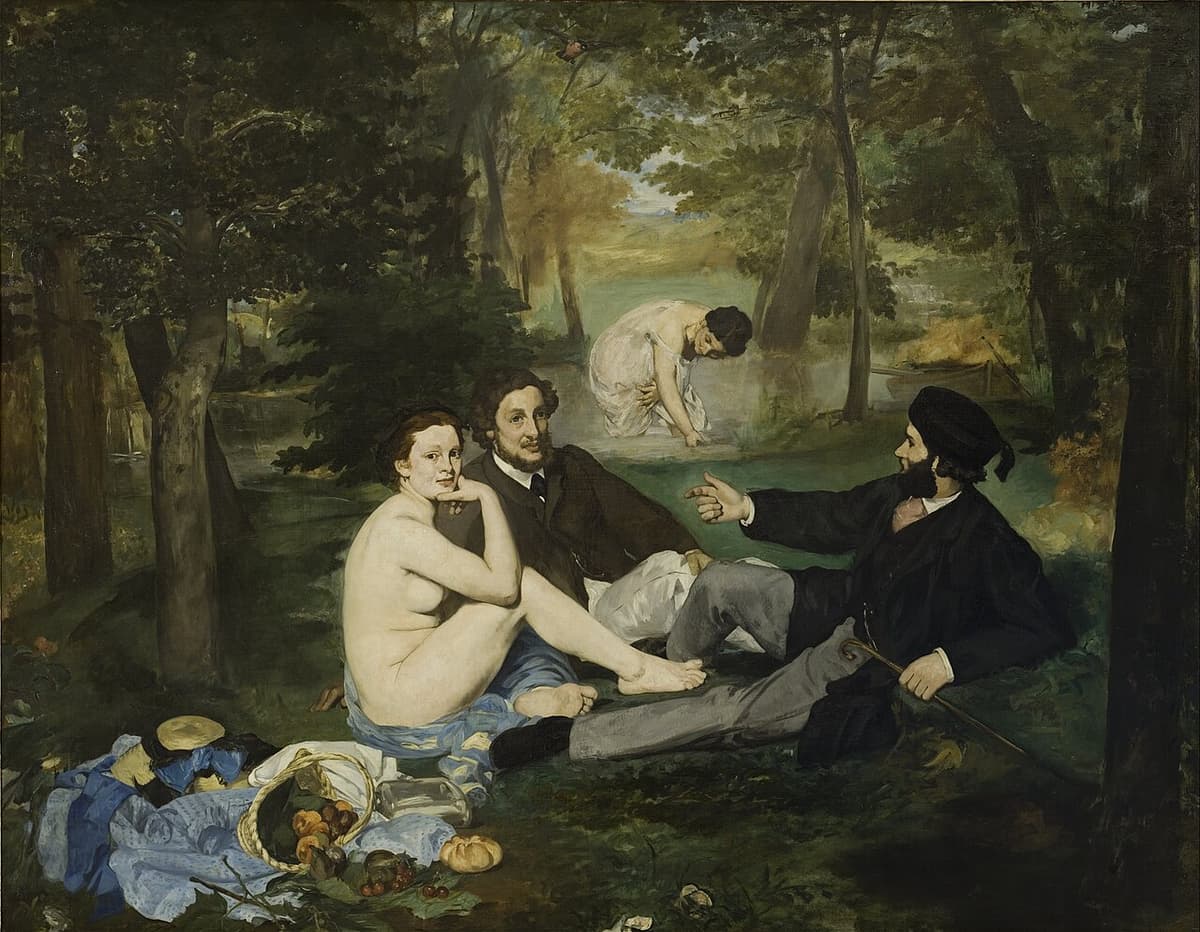
That painting is Manet's Le Déjeuner sur l'herbe.
This is obscene.
In 1863, Manet's Le Déjeuner sur l'herbe ignited a firestorm of controversy.
The scandal centered on a nude woman seated casually among fully dressed men — an image the public denounced as obscene.
But the young Monet saw it differently. He was deeply struck by the painting's audacious composition and its radical new mode of representation.
And so he set out to paint his own Le Déjeuner sur l'herbe under the same title.
He was careful, however, not to repeat the same provocation. Monet dressed all of his figures, transforming the scene into an entirely ordinary picnic of the day — and in doing so, sought to complete something new entirely on his own terms.
Monet's Light, Already Dawning
Though an early work, this painting already reveals the first stirrings of the qualities that would come to define Monet as the great painter of Impressionism.
He would later be celebrated as the painter who rendered light more beautifully than any other — and the seeds of that achievement are already visible here.
Though it was never finished, this painting stands as a vital record of Monet's search for his own artistic voice, and of the very beginnings of Impressionism.