Portrait of Moïse Kisling
A Friend Who Reached Out First, in the Darkest of Times
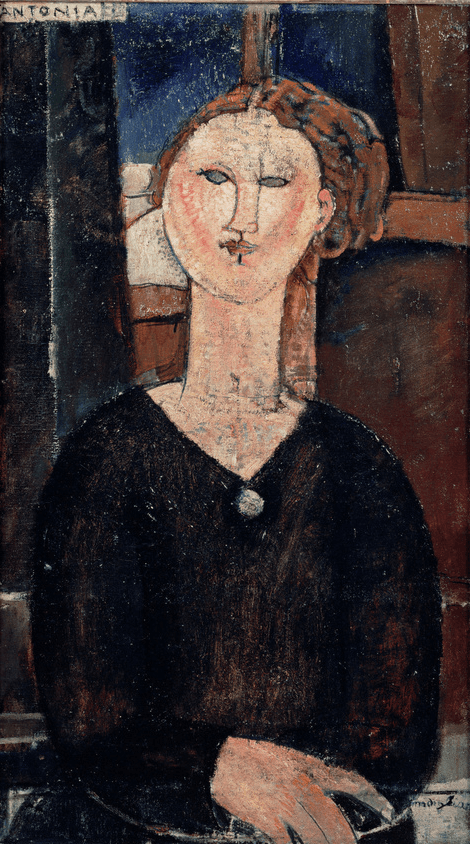
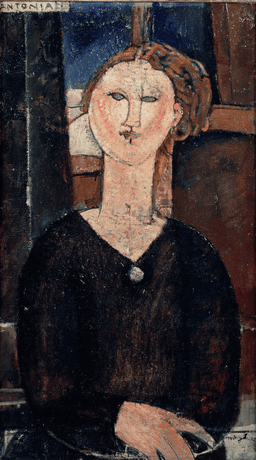
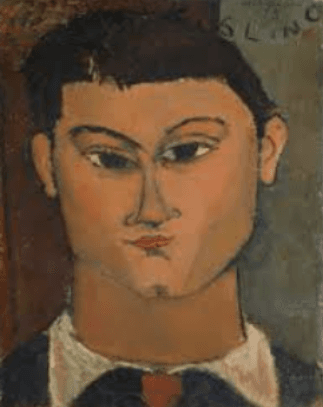
At the top of the painting, a name is written.
"Moïse Kisling"
And that name alone tells you
this is no ordinary commission.
Moïse Kisling was one of Modigliani's closest friends.
Already an artist of some renown at the time, he was also the one who first extended a hand to Modigliani during his most difficult years.
Erasing Everything but the Face
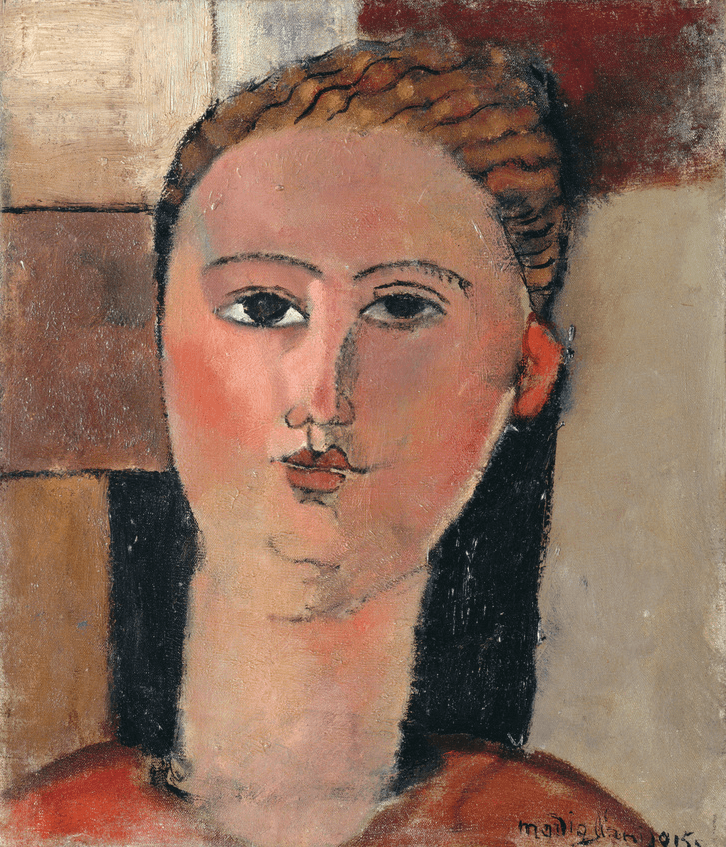
There is something consistent across Modigliani's portraits.
The background is almost entirely emptied out,
leaving only the contours of a face and a body.
The compositions appear strikingly spare,
yet the presence of the subject feels all the more powerful for it.
The elongated face and lines as smooth as carved stone are hallmarks of Modigliani's singular style.
In truth, he was by nature closer to a sculptor than a painter.
But the stone dust from his sculptural work began to ravage his lungs,
and he eventually abandoned sculpture to devote himself fully to painting.
And so his portraits, while undeniably paintings, carry within them something unmistakably sculptural.
Why This Painting Feels Unusually Warm
Yet this portrait feels a little softer, a little warmer, than his other works.
The reason, perhaps, lies in the person it depicts.
At the time, Modigliani was enduring an extraordinarily difficult period — beset by poverty and illness.
It was Kisling who came forward first, commissioning this portrait as a way of offering help.
This painting, then, is not simply a portrait of a friend —
it is closer to a testament of feeling toward the person who kept him afloat in his darkest hour.
Perhaps, with the money he received upon completing this work,
Modigliani barely made it through another day.
But perhaps that is precisely why
this portrait holds, in its quiet way, an almost inexplicable human warmth.