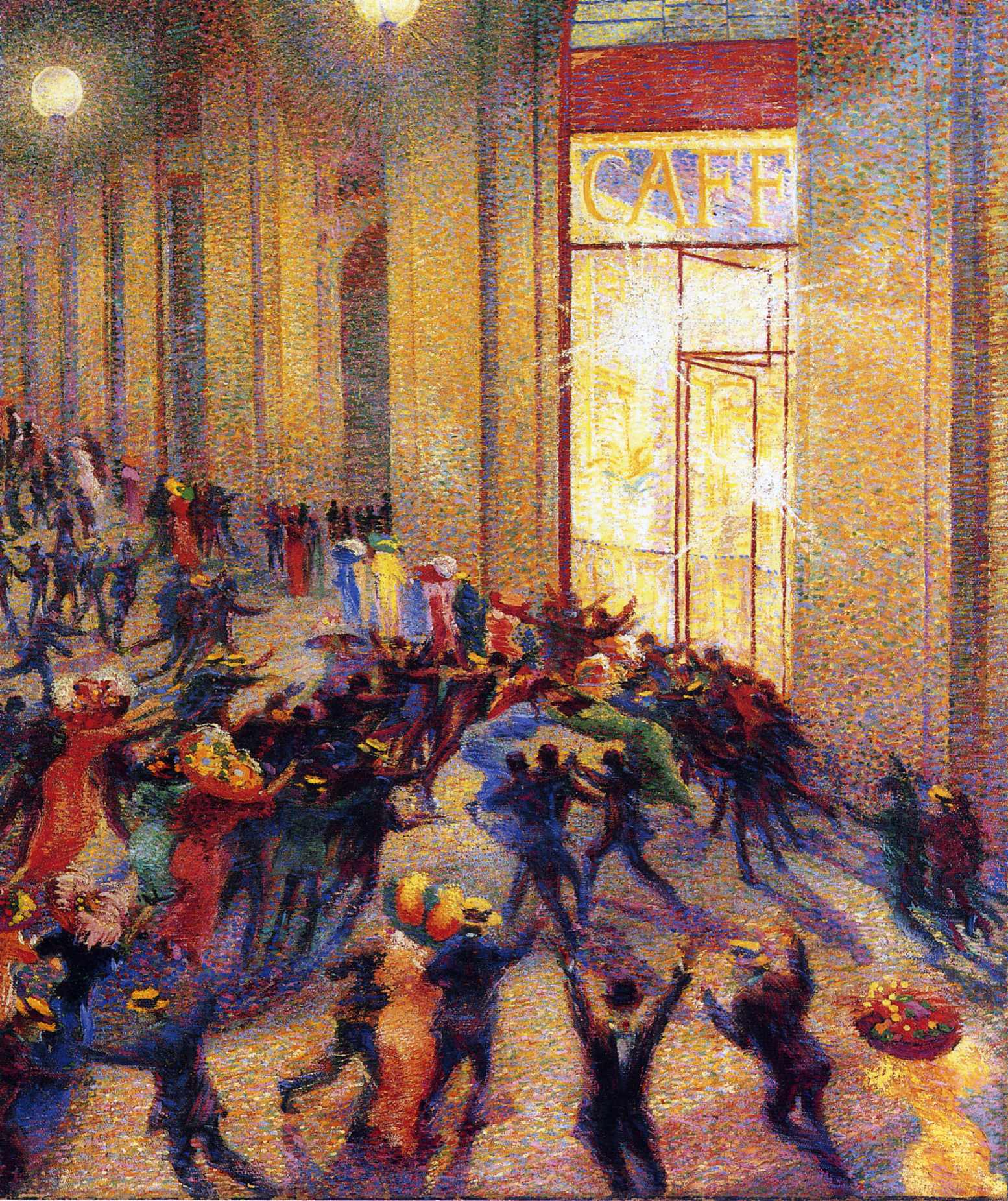
Riot in the Galleria
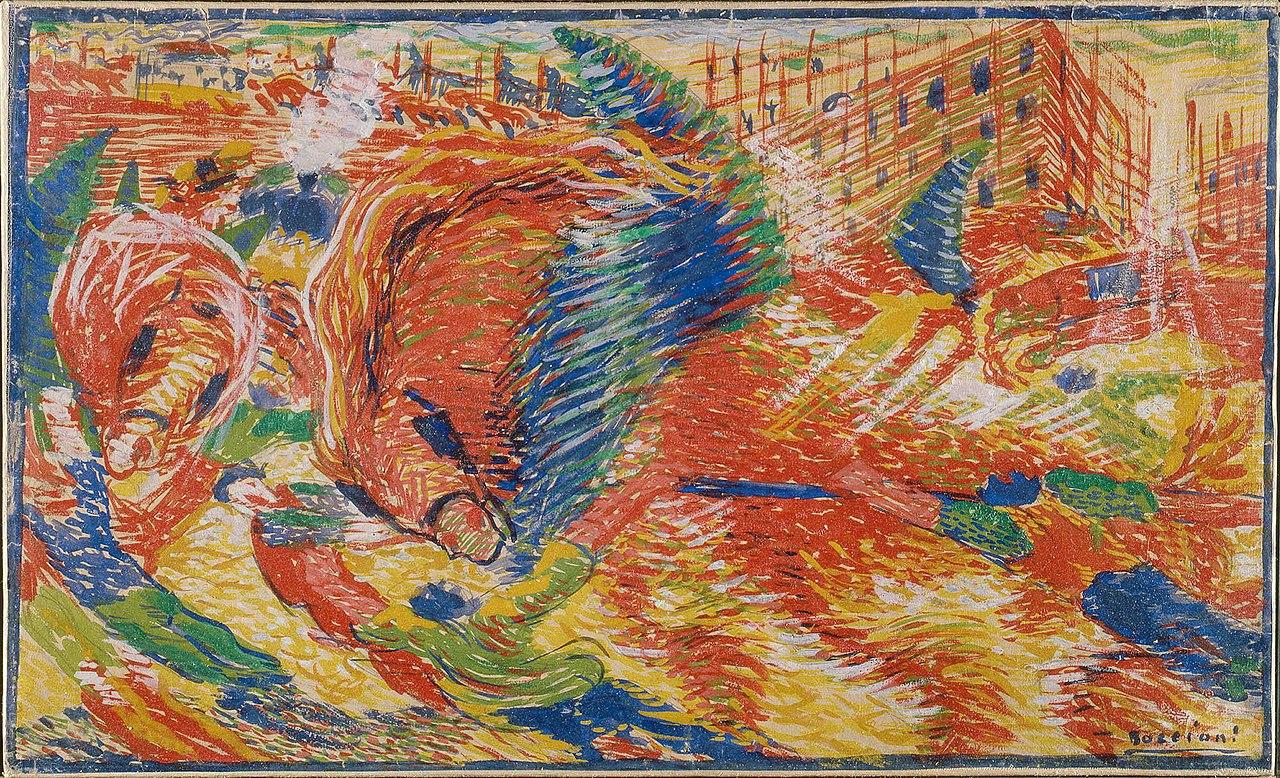
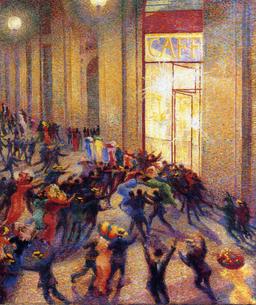
Outside a café, two women are tearing at each other’s hair.
Onlookers rush in within moments,
and the whole street seems to stir with the commotion.
It is a scene of great uproar,
and a touch of the absurd.
Yet Umberto Boccioni did not paint this brawl as a mere street view.
The figures are scattered in rapid, almost sketch-like strokes,
and the short, rough brushwork sets the entire canvas trembling.
It is as if we could see not only the speed of the crowd’s movement but even its noise.
A Painter Who Wanted to Paint Movement Itself
Boccioni was a leading painter of Futurism.
Futurism was a movement that sought to express in art the sensibility of the new age that emerged after the Industrial Revolution:
speed,
machinery,
energy,
and the motion of industrialization.
For this reason, the Futurist painters cared less about “what is depicted”
than about “how it moves.”
Here too, what we feel first is not the shape of the figures
but the energy and movement erupting in an instant.
The broken, staccato brushstrokes were a means of creating precisely that effect.
This technique shows the influence of Divisionism,
a mode of expression the Futurist painters of the time often employed.
The Most Famous Place in Milan
But do you know where the “Galleria” in the title is?
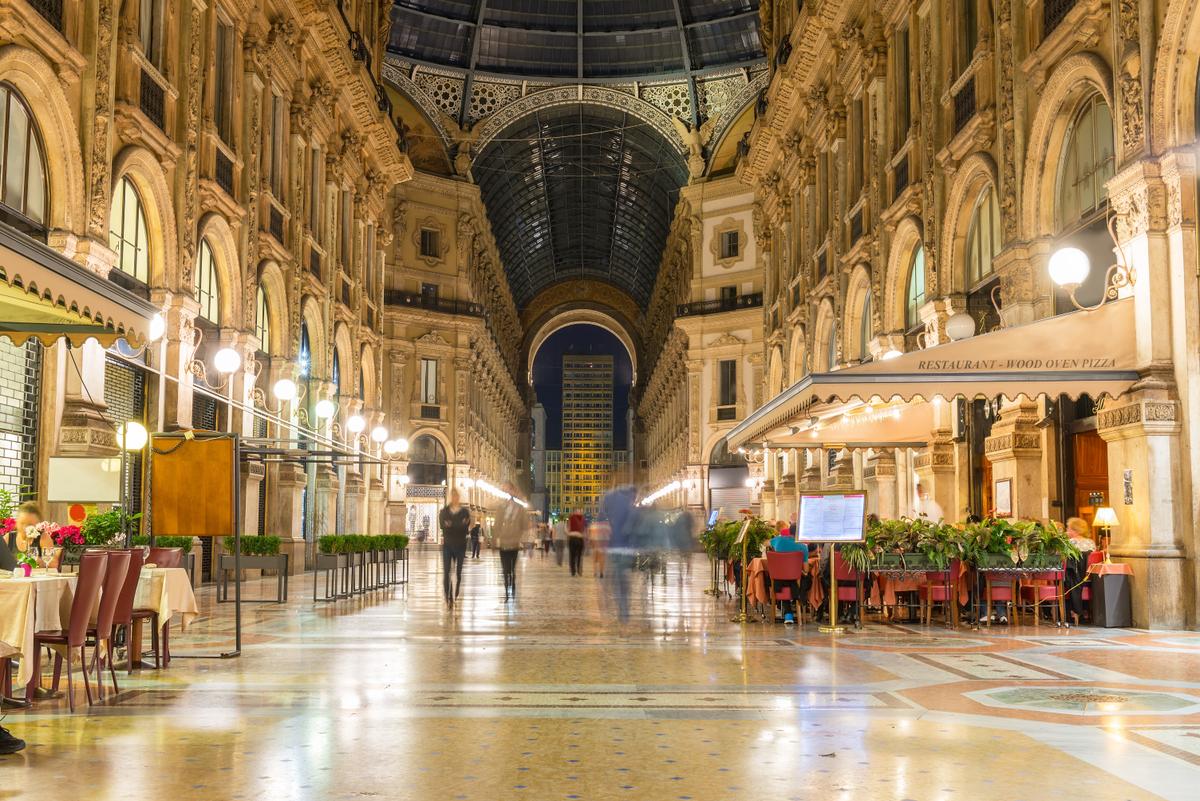
It is the Galleria Vittorio Emanuele II in Milan.
Even today, it is a famous landmark that nearly everyone visiting Milan stops by.
And the setting of this painting
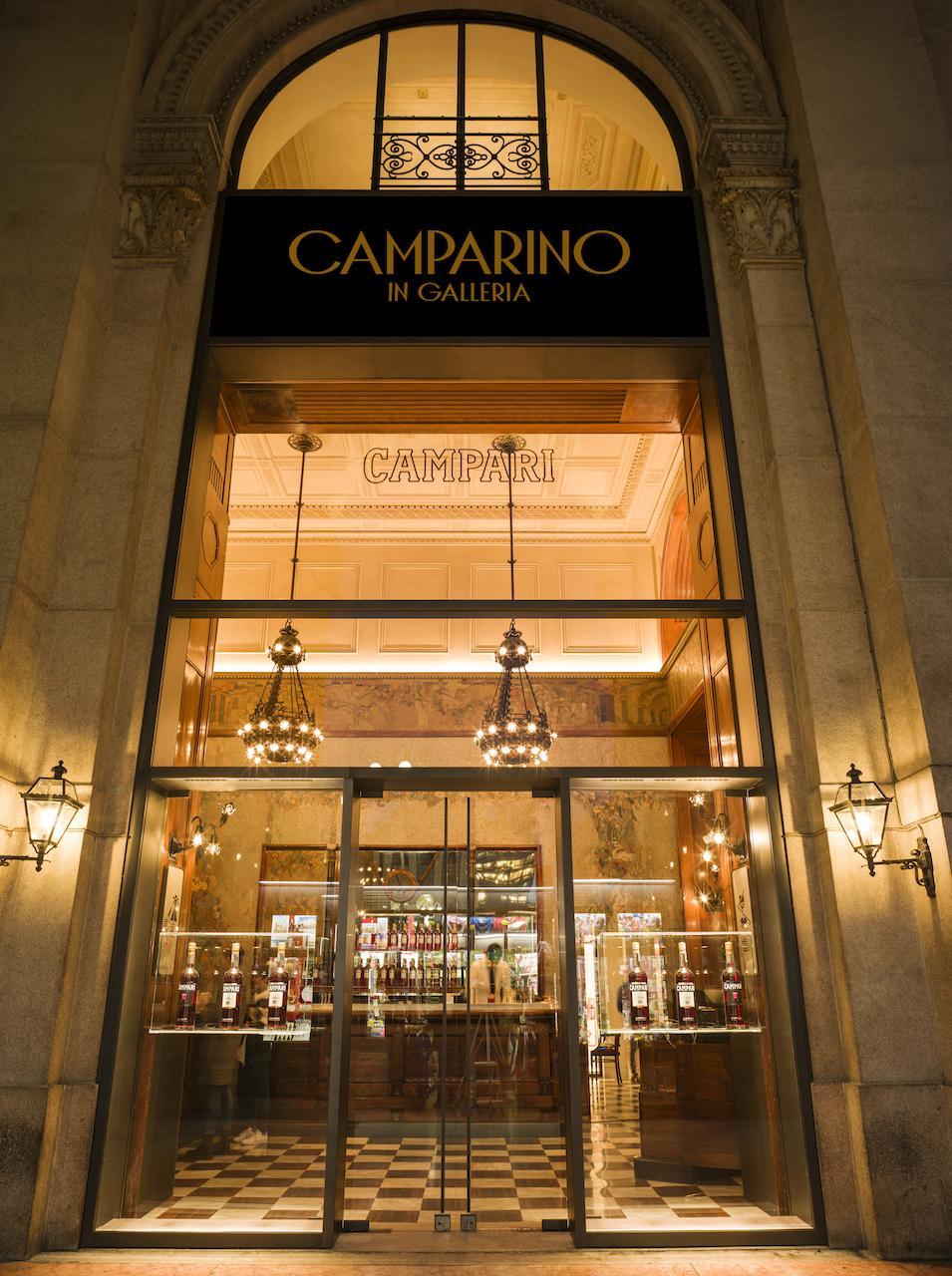
is the front of the Caffè Campari, located inside that Galleria.
After returning to Milan from Paris,
Boccioni is said to have frequented this café almost every day.
The city’s clamor and the movement of its people, which he witnessed there, he transferred directly into the painting.
A Café That Still Stands Today
What is intriguing is
that the Caffè Campari is still in operation today.
So as you walk through Milan’s Galleria,
you may find yourself facing a scene much like the one Boccioni gazed upon a century ago.
People come and go,
the café is loud,
and the city is as busy as ever.
Perhaps because of those short, rough brushstrokes,
that clamorous movement seems to linger on within the canvas still.